

WEST or WASTE : Cause Of Concern for Global Mess...?

Special News Addition for "UNITED NEWS CORPORATION" By Anjali Sharma
WEST or WASTE : What they want
Desire to weaken rival powers , Disrupt the cohesion of regions considered adversarial, To Maintain Legacy of Colonialism, Control Over valuable natural resources, Fake Democratic Ideals and Human Rights....OR Some thing else ......
Is really WEST, is THE Cause of Concern for every Global Mess. Why west control or support every ongoing movement in various part of world, even when they do not have any direct interest with the affected region.
When it comes to why some Western countries might appear to promote or support separatism or independence movements in other parts of the world, several factors are at play, ranging from strategic interests to historical legacies. Here's a breakdown of the potential reasons:
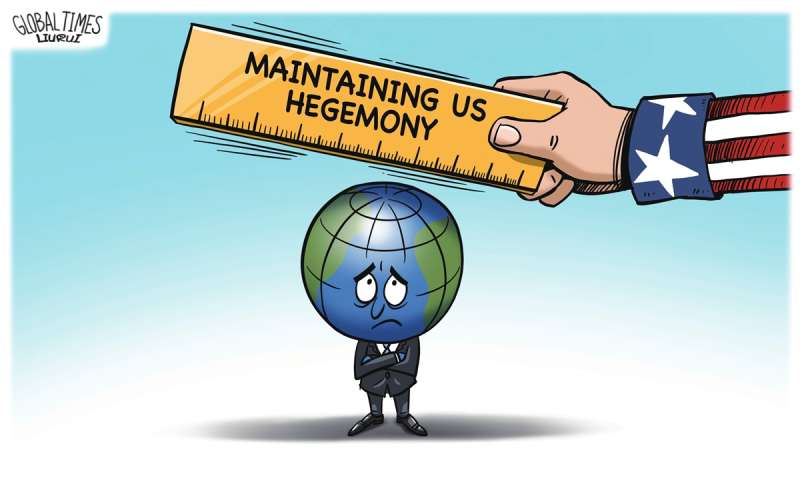
1. Geopolitical Strategy
Western countries, particularly the United States, the UK, and some European nations, sometimes support separatist movements in other regions as part of a broader geopolitical strategy. This could be driven by the desire to weaken rival powers, disrupt the cohesion of regions considered adversarial, or gain influence over newly independent regions.
For example:
- During the Cold War, the United States and the Soviet Union often supported separatist or independence movements in regions under the influence of their adversaries. This was done to weaken their opponents’ global position by creating instability.
- In more recent times, support for separatist movements might be seen in regions where the West has interests in resource extraction, control over trade routes, or a desire to create client states aligned with their economic or political systems.

2. Support for Self-Determination
Western countries often champion the principles of self-determination, which is the right of people to choose their political status, including the option of forming an independent state. This is a principle enshrined in international law (e.g., the United Nations Charter), and many Western nations, which pride themselves on democratic values, may offer rhetorical or diplomatic support to groups seeking independence.
For example:
- Kosovo: Western countries, including the U.S. and several European nations, supported Kosovo's declaration of independence from Serbia in 2008, seeing it as a legitimate expression of self-determination, despite Serbia's opposition.
- South Sudan: Western nations were supportive of the independence of South Sudan in 2011, which followed decades of civil conflict, and they played a role in brokering the peace process.
3. Historical Legacy of Colonialism

Many Western nations, especially European powers like the UK, France, and Spain, have a long history of colonialism. In many cases, these countries left behind legacies of division, conflict, and borders that did not align with the ethnic, cultural, or linguistic divisions of the populations they governed. As a result, movements for independence or separatism in former colonies are sometimes supported as a way of rectifying historical wrongs.
In some instances, Western countries might support these movements as part of a broader commitment to decolonization and post-colonial justice. For example:
- India and Pakistan: After gaining independence from Britain in 1947, both countries experienced regional separations like the creation of Bangladesh in 1971. The West sometimes played a role in these processes.
- African Independence Movements: During the mid-20th century, Western countries (especially the U.S. and UK) had mixed roles in supporting or mediating independence movements across Africa.
4. Economic and Strategic Interests
In some cases, the support for separatism can be driven by economic interests. Western countries may see the possibility of forming new, smaller states that could be more easily controlled, economically advantageous, or aligned with their global business interests. Some regions rich in natural resources or strategic positions may be more appealing if they are politically fragmented.
For example:
- Oil and Resource Control: Some separatist movements are supported because the region in question holds valuable natural resources. The West may support movements that could provide easier access to these resources, especially in Africa, the Middle East, or Central Asia.

5. Influence Over Global Governance
In some instances, Western countries may support separatist movements as a way of increasing their influence in a given region. Supporting a breakaway group or newly formed state could give the West a strong ally, potentially providing military, economic, or political leverage in the region.
For example:
- Taiwan: While the U.S. does not formally recognize Taiwan as independent from China, it has provided military support to Taiwan, viewing it as a crucial ally in the Asia-Pacific region in the context of its competition with China.
- Ukraine: While not explicitly promoting separatism, Western countries supported Ukraine's sovereignty in its territorial disputes with Russia, especially after Russia’s annexation of Crimea in 2014.
6. Democratic Ideals and Human Rights
Some Western countries view supporting separatist movements as an extension of their commitment to promoting human rights and democracy. If a separatist movement is seen as a struggle for self-governance, freedom, or liberation from oppression, Western governments may offer moral, diplomatic, or even military support.
For example:
- Kurds: In regions like Syria and Iraq, Kurdish separatist movements have been supported by Western countries in their fight against ISIS and in their quest for greater autonomy. The West has sometimes framed this as supporting the rights of an oppressed minority.
- Tibet: Western support for Tibet's autonomy from China is another example, with advocacy for the rights of Tibetans as part of a broader concern for human rights.
7. Internal Divisions in Other Countries
Sometimes, the support for separatism can stem from domestic political considerations within the Western country. For example, a Western government might support a separatist movement in another country to weaken or destabilize a regime that is politically unfriendly or to create divisions within an adversarial nation.

8. Humanitarian Reasons
In some cases, Western support for separatism arises from humanitarian concerns, especially in situations where people are facing significant oppression, human rights abuses, or violence. This can be seen in cases where ethnic or religious minorities seek independence to escape persecution or marginalization within a larger state.
For example:
- East Timor: Western countries, including Australia and the U.S., supported the independence of East Timor from Indonesia after years of violent conflict and human rights abuses.
Conclusion
In summary, Western countries might support separatism or independence movements in other parts of the world due to a mix of geopolitical strategy, ideological support for self-determination, historical legacies of colonialism, economic interests, and humanitarian concerns. While the support may vary depending on the situation, the Western stance is often shaped by a combination of national interests, global positioning, and principles about democracy, freedom, and self-determination. Some time to create an illustration to engage world in their marked boundaries.
This was A Special News Addition for "UNITED NEWS CORPORATION" By Anjali Sharma