
How & When "India Will Lead World"
Special News Adition For "UNITED NEWS CORPORATION"
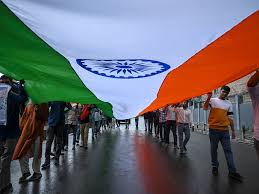
India's emergence as a global leader will depend on several factors, including political stability, economic growth, technological advancement, and strategic international partnerships. While predicting a specific timeline is challenging, here’s an outline of how and when India might take a leading role in the world:
1. Economic Growth
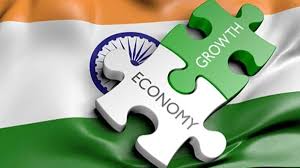
How: India’s economy is one of the fastest-growing in the world. With the right policies in place, such as economic reforms, investment in infrastructure, and fostering innovation, India could continue to grow at a rapid pace. The country has a young population, which can drive consumer demand and workforce participation.
When: If current trends continue, India could become the world’s third-largest economy by the 2030s, possibly surpassing Japan and Germany. The growth trajectory could place India in a leading position by mid-century.
2. Technological and Digital Leadership
How: India has already established itself as a global tech hub, with major players like Tata Consultancy Services (TCS), Infosys, and many tech startups leading in software development and IT services. Additionally, India is investing in cutting-edge technologies such as artificial intelligence (AI), space exploration, and renewable energy technologies.
When: By the early 2030s, India could be a global leader in technology, particularly in AI, fintech, and digital infrastructure. India’s space program (ISRO) is already making significant progress, and by the 2040s, India could be at the forefront of global space exploration and satellite communication.
3. Geopolitical Influence
How: India has long-standing strategic partnerships with countries like the United States, Russia, Japan, and Australia, especially through forums like the Quad (Quadruple Security Dialogue). India can play a central role in Asia-Pacific security, global trade, and political stability.
When: India’s geopolitical influence could continue to grow through the 2020s and 2030s, particularly if it continues to assert itself as a balancing power in Asia and beyond. By 2040, India may be an essential player in shaping the future of global politics.
4. Global Health Leadership
How: India is already a major global supplier of affordable medicines and vaccines. India’s pharmaceutical industry is one of the largest in the world, and it has played a crucial role in distributing COVID-19 vaccines globally.
When: Over the next 10-15 years (by 2035), India’s healthcare leadership could become even more pronounced, as it strengthens its healthcare infrastructure and continues to export vaccines and medicines to other countries.
5. Sustainable Development and Climate Change
How: India has set ambitious renewable energy targets and is investing heavily in solar power, wind energy, and electric vehicles (EVs). India is positioning itself as a global leader in addressing climate change while balancing its developmental needs.
When: India’s shift toward sustainability could be visible by the 2030s. By 2050, India could be one of the world’s top leaders in clean energy, influencing global climate policy and sustainable development.
6. Education and Research
How: India is already home to top-tier educational institutions like the Indian Institutes of Technology (IITs) and Indian Institutes of Management (IIMs). Increasing investment in research and development (R&D) will help India become a leader in scientific research, particularly in fields like biotechnology, engineering, and medicine.
When: By the 2030s, India could become a global hub for education, research, and innovation. It could also attract international students, researchers, and global talent.
7. Soft Power and Cultural Influence
How: India’s cultural influence is already global through Bollywood, yoga, and its diverse traditions. As India becomes a stronger economic and political force, its soft power could grow, spreading Indian culture, values, and philosophy across the world.
When: By the 2030s, India’s cultural and diplomatic influence will likely be more pronounced, helping to shape global narratives on issues like democracy, diversity, and spirituality.
8. Political and Democratic Leadership
How: India’s success as the world’s largest democracy can serve as a model for democratic governance. India could champion democratic values globally, particularly in a world where many democratic institutions are facing challenges.
When: India’s democratic influence could continue to expand in the coming decades, particularly as other countries face political instability or authoritarianism. By 2040, India could be seen as a beacon of democratic governance on the world stage.
Challenges India Needs to Overcome:
While the potential is immense, India faces several challenges that could delay its rise to global leadership:
- Income inequality and poverty reduction remain critical issues.
- Infrastructure development needs further attention, especially in rural areas.
- Political challenges and regional tensions could impact India’s diplomatic and economic growth.
- Environmental issues related to air quality, water scarcity, and land degradation need urgent solutions.
When Will India Lead?
If India continues on its current path of reform, economic growth, and strategic partnerships, the next 10-20 years could see India emerging as a more prominent global leader. By the 2030s, India could be in a strong position to lead the world in various areas, especially economic growth, technology, and geopolitics. By 2050, India could be one of the most influential nations on the global stage, with leadership in multiple sectors, from the economy to sustainability.
India’s rise as a global leader depends on the combination of internal reform, global cooperation, and strategic vision. The coming decades will be crucial in determining how quickly and effectively India can position itself to lead the world.
Special News Adition For "UNITED NEWS CORPORATION"